
Agentic AI Is Here — And It's Changing What IT Consulting Means
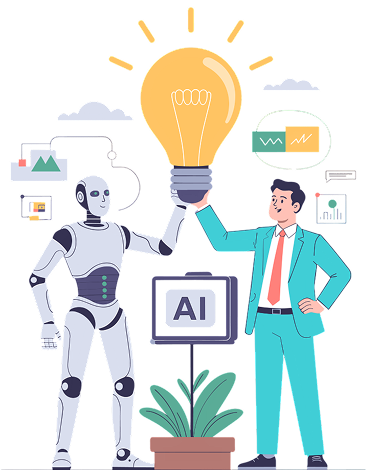
Agentic AI Is Here — And It's Changing What IT Consulting Means
Autonomous AI agents have moved from the lab to the boardroom. Here's what every enterprise and IT consultant must understand — right now.
Enterprise AI
IT Strategy
Author: Atologist Infotech
Published: 10 March 2026
AGENTIC AI
IT CONSULTING
ENTERPRISE AI STRATEGY
AI AUTOMATION
DIGITAL TRANSFORMATION
MULTI-AGENT SYSTEMS
Introduction
For years, IT consulting meant one thing: assess, recommend, implement. Consultants were translators - bridging the gap between business needs and technology capability. But in 2026, the translator has a new colleague. It's called an AI agent, and it doesn't wait to be asked.
The rise of agentic AI - autonomous systems that can plan, decide, and execute multi-step tasks without constant human instruction - is rewriting the playbook for IT strategy, digital transformation, and enterprise consulting itself. This isn't another chatbot upgrade. It's a structural shift.
What Is Agentic AI, and Why Does It Matter Now?
Traditional AI tools - think recommendation engines, predictive analytics, or even generative AI chatbots - operate reactively. A human asks; the AI responds. Agentic AI flips this model. These systems are goal-oriented: you provide an objective, and the agent independently plans and executes the steps needed to achieve it, coordinating with other systems, APIs, and even other agents along the way.
For IT consulting, this matters enormously. When an agent can autonomously audit an infrastructure environment, generate a remediation report, file support tickets, and schedule remediation windows - all without human hand-holding - the scope of what a consultancy can deliver changes overnight.
Key benefits include:
- Faster page loading
- Offline accessibility
- Improved mobile performance
- Lower development and maintenance costs
Artificial Intelligence in Web Development
Artificial intelligence is transforming how websites interact with users. AI-powered features such as chatbots, recommendation engines, and automated customer support systems help businesses provide personalized experiences.
Developers are also using AI tools to automate coding processes, improve security monitoring, and optimize website performance.
Examples of AI-powered features:
- Smart chatbots
- Personalized content recommendations
- Voice search integration
- Automated customer support
Enterprise applications expected to embed AI agents by end of 2026 (up from <5% in 2025)
Source: Gartner Via MLM
Organizations that planned to deploy agentic AI systems in 2025
"The sentiment has shifted from 'what is possible' to 'what can we operationalize.'" - Kapil Bakshi, Distinguished Engineer, Cisco U.S. Public Sector
How Agentic AI Is Reshaping IT Consulting
1. From Project-Based To Outcome-Based Engagements
Traditional IT consulting projects follow a familiar arc: scoping, delivery, handover. Agentic AI breaks this model. When autonomous agents can continuously monitor, optimize, and adapt IT environments in real time, clients increasingly want outcome-based contracts - paying for results, not hours. IT consultants must evolve from project managers to outcome architects.
2. The Rise of AI Orchestration as a Core Competency
Rather than one all-purpose AI, leading organizations are moving toward orchestrated multi-agent systems - specialized agents that collaborate like a team. According to research by Machine Learning Mastery, Gartner reported a staggering 1,445% surge in multi-agent system inquiries from Q1 2024 to Q2 2025. IT consultants who can design, govern, and integrate these agent networks will be indispensable.
3. Workflow Redesign Is Now Table Stakes
The biggest failure mode in agentic AI deployments isn't the technology - it's bolting agents onto legacy processes. As PwC's 2026 AI Business Predictions make clear, the "80/20 rule" applies: technology delivers roughly 20% of value, while redesigning how work is done delivers the other 80%. IT consultants must lead process transformation, not just tool deployment.
4. Governance and Trust Become Revenue-Generating Services
Deloitte's 2025 Emerging Technology Trends study found that while 30% of organizations are exploring agentic AI and 38% are running pilots, only 11% are actively using these systems in production. The gap? Governance, trust, and integration readiness. Consultants who build AI governance frameworks, audit trails, and human-in-the-loop oversight models will unlock a premium service tier.
⚡ The New IT Consulting Stack in the Agentic Era
- Agent architecture design - Selecting, designing, and orchestrating specialized AI agents
- Legacy system integration - Connecting agent networks with existing enterprise infrastructure
- Outcome measurement - Defining the KPIs that prove agent-driven ROI
- AI governance frameworks - Audit trails, compliance guardrails, and responsible AI rollouts
- Outcome measurement - Defining the KPIs that prove agent-driven ROI
- Change management - Preparing human teams to work alongside autonomous systems
Where Agentic AI Is Already Winning in IT Operations
The technology sector leads agentic AI deployment at 46% of current implementations, followed by consulting and professional services at 18%, and financial services at 12%, according to research compiled by Master of Code Global. Here's where IT consultants are seeing the clearest early wins:
- ITOps & SecOps automation - Agents handling anomaly detection, alert triage, and automated remediation, enabling self-healing IT environments.
- Infrastructure modernization - AWS's Transform product and similar platforms use agentic AI to accelerate migration from legacy systems to cloud environments.
- Cross-domain workflow orchestration - AI agents breaking down silos between IT, security, observability, and business operations teams.
- Post-incident analysis - Root cause analysis and incident reports generated in hours rather than days.
- Data modernization - Synchronizing disparate enterprise data systems to enable context-aware agentic AI, as Oracle is doing with several government contracts.
Broader enterprise outcomes are equally compelling 90% of companies report more efficient workflows with generative and agentic AI, and 75% have seen measurable improvements in satisfaction scores following AI agent deployment.
The Dangerous Gap - And How Consultants Can Bridge It
Here's the hard truth: fewer than one in four organizations that experiment with AI agents successfully scale them to production. This chasm between pilot and production is 2026's defining business challenge - and the single greatest opportunity for IT consultants.
According to Deloitte, three fundamental infrastructure obstacles block most organizations:
- Legacy system integration - Traditional enterprise systems weren't designed for agentic interactions; most agents still rely on APIs that create bottlenecks.
- Governance gaps - 35% of organizations have no formal agentic AI strategy; 42% are still building one.
- Workflow misalignment - Treating agents as productivity add-ons rather than transformation drivers consistently leads to failed scaling.
For IT consultants, this gap is the engagement. Helping clients move from "agent in a sandbox" to "agent running production workflows" requires deep expertise in enterprise architecture, data infrastructure, change management, and AI governance simultaneously.
"McKinsey research reveals that high-performing organizations are three times more likely to successfully scale AI agents than their peers - and the differentiator is workflow redesign, not model sophistication."
A Practical AI Strategy Framework for IT Consultants in 2026
Drawing on guidance from PwC, Deloitte, and industry research, here's how forward-thinking IT consultants are structuring their agentic AI advisory approach:
Step 1 - Identify High-Value, Agent-Ready Workflows
Not every process is a good candidate. Prioritize workflows that are high-volume, rule-based, multi-step, and currently dependent on manual coordination across systems. These are where agents generate 10x ROI fastest.
Step 2 - Assess Data Readiness
Agentic AI is only as smart as the data it can access. Conduct a data fabric assessment: Is enterprise data structured, contextualized, and accessible via APIs? Context-aware AI requires modern data assets.
Step 3 - Design the Agent Architecture
Choose between single-agent and multi-agent approaches. For complex enterprise workflows, multi-agent orchestration - with a "puppeteer" coordinator and specialist sub-agents - outperforms monolithic deployments.
Step 4 - Build Governance Before You Scale
Define human-in-the-loop checkpoints, audit logging, fallback mechanisms, and escalation protocols before deployment. Responsible AI governance isn't a checkbox - it's a scaling enabler.
Step 5 - Measure Outcomes, Not Activity
Use PwC's framing: if a task that took five days now takes two days (even through 15 AI iterations instead of 2), you're ahead. Set concrete outcome metrics - P&L impact, operational throughput, error rate reduction - and track them from day one.
What This Means for Your Business - Right Now
Whether you're an enterprise leader evaluating AI investments or an IT consultancy building your next-generation service offering, the window for strategic positioning is open - but narrowing.
As Info-Tech Research notes, agentic AI will power exponential growth for organizations that adopt it strategically. For IT consulting firms, the firms that build deep competencies in agent design, governance, and outcome measurement will define the next decade of the industry. Those that don't risk being outpaced - not by competitors, but by the agents themselves.
Ready to Build Your
Agentic AI Strategy?
Our IT consulting team specializes in designing, governing, and scaling enterprise agentic AI systems that deliver measurable outcomes — not just demos.